
“How Masking Acne Unmasked My Passion for Fashion.” - Vuyani Ngobeni
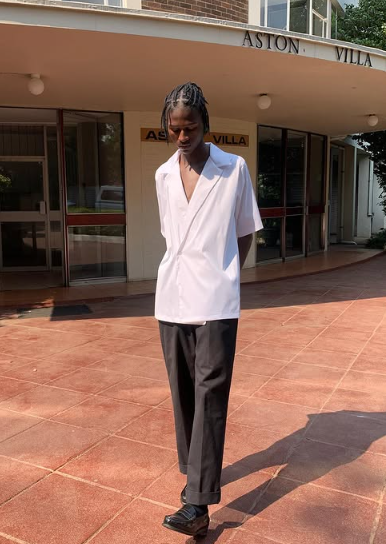
For Vuyani Ngobeni, fashion is more than fabric stitched into form, it is identity, confidence and self-expression woven together through every garment he creates. A fashion designer by trade, Vuyani carries himself with the quiet assurance of someone who understands his craft deeply. It is evident in the striking self-designed outfits he wears: bold jackets, oversized and baggy trousers, and unconventional combinations that challenge the ordinary. Every stitch and seam reflects a deliberate standard of excellence.
In an industry where slim-fit fashion dominates, Vuyani intentionally moves against the current. His work blends contemporary style with vintage influence, particularly through his love for baggy pants and bell-bottom trousers. Distinctive and unapologetic, his fashion choices mirror his personality, one that refuses to conform simply because convention demands it.
Yet his journey into fashion did not begin with sketches, runways or dreams of becoming a designer. It began with a deeply personal struggle.

“What pushed me into fashion was actually my acne,” he reveals. “During Covid, wearing a mask made it easy to hide my skin. But the moment I took it off, people would start wondering what was going on with my face.”
What started as an attempt to redirect attention soon became a turning point. Rather than shrinking under insecurity, Vuyani began creating bold outfits that demanded attention before anyone could focus on his skin. Through clothing, he discovered both protection and self-expression.
In the process, confidence slowly replaced self-consciousness. What began as a coping mechanism soon evolved into a genuine passion, one strong enough to push him toward formal training at the Johannesburg Fashion School. There, his creativity flourished. His talent quickly distinguished him from others, earning him recognition and awards that hinted at the promise of a bright future in the industry.
Today, Vuyani’s work speaks before he does. His garments tell stories shaped by resilience, individuality and a refusal to blend into the background. Every piece carries traces of the personal journey that brought him into fashion in the first place.
That same determination has followed him into the workplace. At Image at Work, Vuyani has emerged as a young leader, heading the company’s CMT department despite being the youngest member of the team. It is a role that demands authority, maturity and balance, qualities he has had to develop quickly while navigating the complexities of leadership among older colleagues.
“Sometimes you struggle to distinguish between respect and disrespect,” he explains. “Being the youngest person in the building means you’re expected to respect everyone else. But at the same time, being in a leadership position means you need a certain level of authority and must let people know you’re in charge, and that things should be done the way you direct them.”
The position comes with its pressures. Tight deadlines, demanding clients and unrealistic turnaround times are part of the daily reality. Yet Vuyani approaches those challenges with composure and discipline.
“One of the biggest challenges we face at work is dealing with tight deadlines and operating under intense pressure,” he says. “There are times when multiple clients come in at once, all expecting their orders to be completed within extremely tight timeframes.”
For him, sailing through such times requires resilience and patience. He believes quality work can only be achieved through persistence and trust in process, even when time feels limited.
Despite the demands, Vuyani credits Image at Work for significantly expanding both his experience and passion for fashion.
“Image at Work has really helped me grow by giving me practical knowledge,” he says. “When you leave school, you mostly have theoretical knowledge, but at a company like Image at Work, you get exposed to the practical side of things step by step.”
Building on that thought, he explains that the experience has helped him understand how production operates while exposing him to both the business and manufacturing aspects of the industry, including the critical considerations involved in going into production.
The opportunity has also brought him closer to the environments he once dreamed of being part of. From working with textiles and fabrics to operating machinery and creating patterns, Vuyani now contributes to projects for major brands, producing jackets, gazebos and wall banners, opportunities he once could hardly imagine.
Beyond fashion itself, Vuyani is also passionate about challenging societal stereotypes, particularly those surrounding men in industries often labelled as feminine.
“There’s a lot of stereotypes about men who work in fields that are considered feminine,” he says. “This is common in fields like nursing and fashion.”
He believes such perceptions discourage many young men from pursuing careers they are genuinely passionate about. His message to them is simple: ignore society’s limitations and pursue what gives you purpose.
“Everyone was brought to this earth to do whatever they want to do,” he says. “If you’re into fashion and you’re a guy, get into fashion. If you’re a model and you’re a guy, model. If you want to be a nurse, be a nurse. It’s your life and you only live it once, because you miss every single opportunity that you don’t take.”
When offering advice to young people, Vuyani avoids the clichés often associated with mentorship. Instead, he speaks from experience, acknowledging that success rarely follows a single formula.
“Everybody’s story is different,” he says. “You’ll see people achieving their goals a certain way. Maybe you’re trying to achieve that same goal, but you’ll have to go through a different path. My advice to young people would be to start what you want to start, go through it and figure out your way of making it along the way.”
For Vuyani, even his hobbies remain closely tied to the world of fashion, a reflection of the deep and almost inseparable connection he shares with the craft.
“My hobbies are still mostly within the fashion space,” he says with a laugh. “But I also work with a friend who owns a fitness brand. Being around him and seeing how committed he is to fitness has inspired me to start my own fitness journey, which has sparked an interest in hiking and jogging.”
Beyond fashion and fitness, Vuyani also draws inspiration from his father, a martial artist. Influenced by that upbringing, he hopes to eventually pursue Iko Matsushima martial arts.
For Vuyani Ngobeni, fashion has never been merely about clothing. It has become a language through which he expresses resilience, individuality and courage, proof that what once felt like insecurity can ultimately evolve into purpose.